


The cryptocurrency world is no stranger to controversy, but when Ben Zhou, the CEO of Bybit—one of the largest crypto exchanges—publicly labelled Pi Network a scam, it sent shockwaves through the community. This bold statement sparked heated debates among crypto enthusiasts, investors, and Pi Network’s 60 million-strong user base. So, why did Zhou make such a claim? Is there truth behind it, or is it just a clash of perspectives in the volatile crypto space? In this detailed, article, we’ll break down the reasons behind Zhou’s accusation, analyze Pi Network’s response, and explore what this means for the crypto industry—all while keeping things clear, engaging, and easy to understand.
Table of Contents
Understanding the Background: Who Are Bybit and Pi Network?
Before diving into the controversy, let’s set the stage:
- Bybit: A leading cryptocurrency exchange founded in 2018, Bybit is known for its robust trading platform and strict listing criteria. Led by CEO Ben Zhou, the exchange has built a reputation for transparency and caution, often avoiding tokens with questionable legitimacy.
- Pi Network: Launched in 2019 by Stanford PhDs, Pi Network markets itself as a mobile-first cryptocurrency that allows users to “mine” coins on their phones without draining battery or requiring technical expertise. It claims over 60 million users and aims to create a decentralized ecosystem for payments, dApps, and more.
Pi Network’s promise of easy crypto access for the masses has garnered a massive following, but it’s also attracted scepticism—culminating in Zhou’s public accusation in early 2025.


Why Did Bybit’s CEO Call Pi Network a Scam?
Ben Zhou’s claim wasn’t made lightly. It stemmed from a mix of regulatory warnings, concerns about Pi Network’s business model, and broader red flags in the crypto space. Let’s break down the key reasons:
1. The 2023 Chinese Police Warning
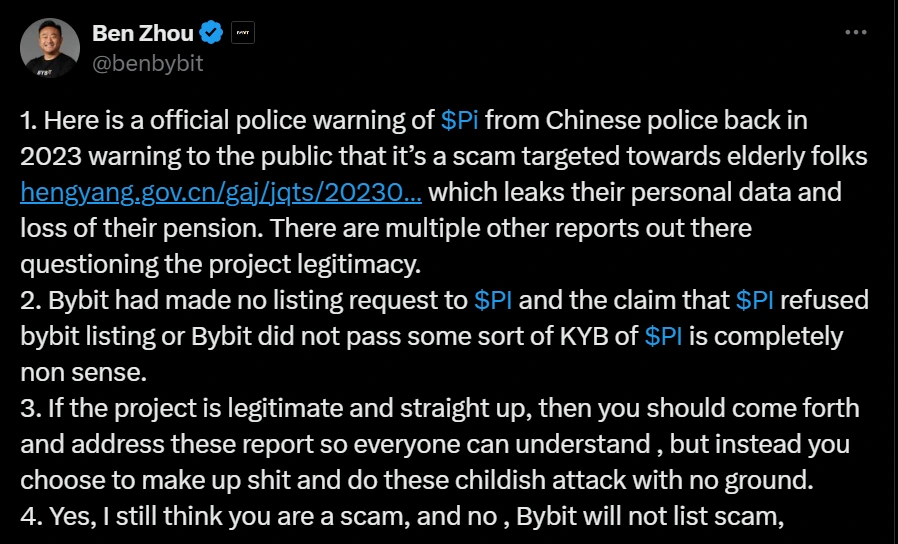
The primary trigger for Zhou’s accusation was a 2023 warning from the Wuxi City Public Security Bureau in China. According to the report:
- Scammers posing as Pi Network representatives targeted vulnerable groups, particularly the elderly.
- They lured victims with promises of “getting rich overnight” by mining Pi coins on their phones.
- These fraudsters allegedly collected personal data, resold it, and tricked victims into investing in their pensions, leading to significant financial losses.
Zhou referenced this warning in an X post, stating, “Yes, I still think you are a scam, and no, Bybit will not list scam.” He challenged Pi Network to address these reports transparently, emphasizing the harm done to vulnerable individuals.

2. Concerns Over Pi Network’s Referral and Token Lock-Up Systems
Beyond the police warning, Zhou criticized Pi Network’s operational structure, drawing parallels to Ponzi schemes like Bitconnect and Hex. Here’s what raised red flags:
- Referral System: Pi Network offers a 25% bonus on mining rates for each referred user who mines concurrently, with no limit on referrals. While this incentivizes growth, critics argue it resembles pyramid schemes, where value hinges on recruitment rather than utility.
- Token Lock-Up: Until its mainnet launch in early 2025, Pi coins were locked and couldn’t be traded or withdrawn. This mechanism, meant to stabilize the network, led some to question whether it trapped users’ investments in a speculative bubble.
Zhou argued these features mirror Ponzi-like structures, where early adopters profit at the expense of latecomers, potentially leading to a collapse when recruitment slows.
3. Lack of Transparency and Utility
Another concern Zhou implied was Pi Network’s slow delivery of promised utility. While Pi Network aims to support peer-to-peer transactions, decentralized apps (dApps), and staking, its ecosystem is still developing. Critics point to:
- Delays in the mainnet launch were originally expected earlier than 2025.
- Slow KYC (Know Your Customer) processes, limiting user access to the blockchain.
- Limited transparency from the core team about tokenomics and long-term plans.
For Zhou, these issues might suggest Pi Network prioritizes user growth over building a sustainable product, a common trait in questionable crypto projects.
Pi Network’s Response: Defending Their Legitimacy
Pi Network didn’t stay silent. They issued a detailed response to Zhou’s claims, aiming to set the record straight. Here’s what they said:
- On the Chinese Police Warning: Pi Network claimed the 2023 warning was about imposters misusing their name, not the project itself. They stated that no authorities had directly contacted them about fraud.
- User Base Clarification: Of their 60 million users, only 10 million have created blockchain wallets, indicating a phased transition to their open network. They argue this reflects a cautious, deliberate rollout.
- Commitment to Utility: Pi Network emphasized their roadmap, including plans for real-world use cases like payments and dApps, with their mainnet now live and tokens tradable on exchanges like OKX and Gate.io.
Despite these defences, Zhou remained unconvinced, calling their response “deflections” rather than clear answers, and reaffirmed Bybit’s refusal to list Pi’s token.
Analyzing the Debate: Is Pi Network a Scam?
To understand this controversy, let’s weigh both sides with a balanced perspective. Below is a comparison of Pi Network’s features against typical Ponzi scheme traits:
| Aspect | Pi Network | Ponzi Scheme Characteristics |
|---|---|---|
| Revenue Source | Early investors profit, and late investors lose | Payments from new investors, no real product |
| Early vs. Late Investors | Early investors profit, and late investors lose | Early investors profit, late investors lose |
| Sustainability | Claims utility via dApps, P2P transactions | Collapses when no new investors join |
| Regulatory Scrutiny | Chinese warning, ongoing debates | Often illegal, shut down by authorities |
Red Flags Supporting Zhou’s View
- The referral-heavy model does raise concerns about sustainability, as growth could stall without constant recruitment.
- Reports of data breaches (e.g., a 2021 leak involving 10,000 Vietnamese users) add to scepticism about security.
- Price volatility post-mainnet launch (a 242% surge followed by a 60% crash) suggests speculative hype rather than stable value.
Arguments Supporting Pi Network
- The project has a working blockchain and tradable tokens, unlike many outright scams that never deliver.
- Its large user base and listings on reputable exchanges like OKX indicate some market trust.
- Pi Network’s focus on accessibility aligns with crypto’s ethos of financial inclusion, though execution matters.
Broader Implications: What Does This Mean for Crypto?
The clash between Bybit and Pi Network highlights broader challenges in the crypto industry:
- Regulatory Gray Areas: Without clear global regulations, projects like Pi Network operate in a murky space, making it hard to distinguish innovation from scams.
- User Risk: Vulnerable users, like the elderly targeted in China, face real risks from misinformation and fraudulent schemes, as Zhou pointed out.
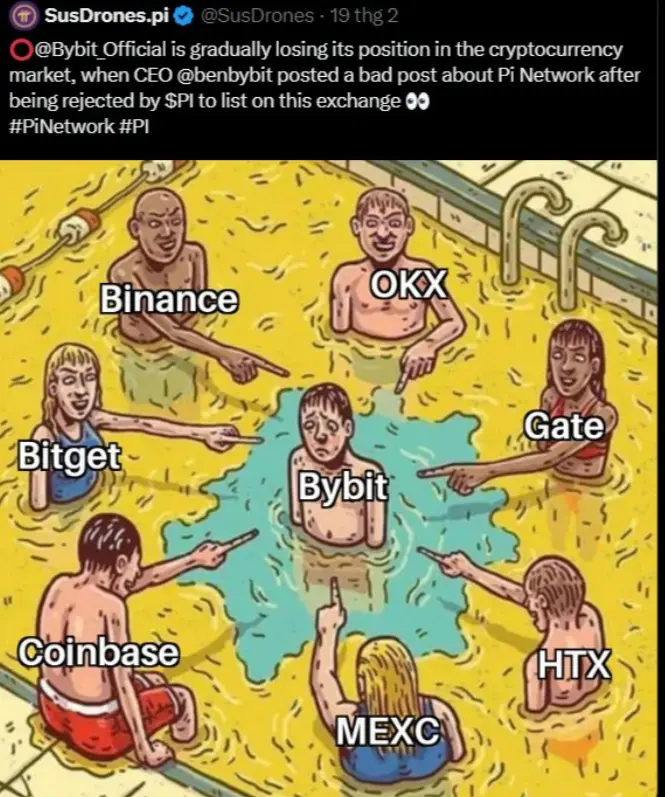
- Exchange Responsibility: Bybit’s refusal to list Pi underscores the role of exchanges in vetting projects. Zhou’s stance may pressure other platforms to be more cautious.
What Should Users Do? Key Takeaways for Investors
For crypto enthusiasts and potential Pi Network users, this controversy offers valuable lessons:
- Do Your Research: Investigate any project’s whitepaper, team, and blockchain activity. For Pi Network, check their mainnet updates and tokenomics.
- Beware of Hype: Promises of easy money or exponential growth often signal risk. Pi’s referral bonuses, while tempting, should be approached with caution.
- Monitor Regulatory Updates: Keep an eye on news from authorities, as further investigations could clarify Pi Network’s status.
- Diversify Investments: Don’t put all your funds into a single project, especially one with ongoing debates about legitimacy.

Conclusion: A Controversy That’s Far From Over
As of March 2025, the debate between Bybit’s Ben Zhou and Pi Network remains unresolved. Zhou’s accusation, rooted in a Chinese police warning and concerns about Pi’s business model, reflects genuine worries about user safety and market integrity. Pi Network’s response, while addressing some points, hasn’t fully quelled scepticism, especially with lingering questions about transparency and utility.
For now, the crypto community watches closely. Will Pi Network prove its worth with a robust ecosystem, or will Zhou’s warnings be validated? Only time—and further developments—will tell. Until then, users and investors should tread carefully, armed with knowledge and a healthy dose of scepticism.
FAQs About Why Bybit CEO Called Pi Network a Scam
-
Why did Bybit’s CEO call Pi Network a scam?
Ben Zhou, the CEO of Bybit, labelled Pi Network a scam primarily due to a 2023 Chinese police warning that highlighted fraudsters using Pi Network’s name to target vulnerable groups, like the elderly, by promising easy money and collecting personal data. Zhou also criticized Pi Network’s referral system and token lock-up mechanisms, comparing them to Ponzi schemes like Bitconnect, and questioned the project’s transparency and utility.
-
What was the Chinese police warning about Pi Network?
In 2023, the Wuxi City Public Security Bureau in China issued a warning about scams involving “π Coin” (Pi Network’s token). The report claimed scammers deceived elderly individuals with promises of wealth through mobile mining, collected their personal data, resold it, and defrauded them of their pensions. Ben Zhou cited this as a key reason for his concerns, though Pi Network denied direct involvement, claiming the warning was about imposters.
-
How did Pi Network respond to the scam allegations?
Pi Network rejected the accusations, stating that the Chinese police warning was about bad actors misusing their name, not the project itself. They clarified that they were never directly contacted by authorities about fraud. They also highlighted their 60 million user base, with 10 million on their blockchain, and emphasized their ongoing efforts to build a legitimate ecosystem for payments, dApps, and staking.
-
What is Pi Network’s referral system, and why does it raise concerns?
Pi Network’s referral system offers users a 25% bonus on their mining rate for each person they invite who mines concurrently, with no limit on referrals. Critics, including Ben Zhou, argue this resembles pyramid schemes, where value depends on recruitment rather than real utility. If growth relies heavily on new users without a sustainable product, it could collapse, leaving latecomers at a loss.
-
Is Pi Network actually a Ponzi scheme?
The debate is ongoing. While Pi Network shares some traits with Ponzi schemes—like a referral-heavy model and early adopters benefiting more—it also has a working blockchain and tradable tokens, unlike many outright scams. However, its delayed utility, slow KYC processes, and lack of transparency raise concerns. There’s no definitive proof it’s a Ponzi scheme, but the red flags warrant caution.
-
What is the current status of Pi Network as of 2025?
As of March 2025, Pi Network has launched its mainnet, allowing tokens to be traded on exchanges like OKX and Gate.io. It claims over 60 million users, with 10 million having blockchain wallets. However, its ecosystem for real-world use cases (like payments and dApps) is still developing, and price volatility post-launch (a 242% surge followed by a 60% crash) has fueled scepticism.
-
Why won’t Bybit list Pi Network’s token?
Ben Zhou stated that Bybit refuses to list Pi Network’s token because he believes it’s a scam, citing the Chinese police warning and concerns about its business model. Bybit has strict listing criteria to protect users, and Zhou’s public stance reflects his commitment to avoiding projects with questionable legitimacy, even if it means missing out on potential market interest.
-
Are there other reports questioning Pi Network’s legitimacy?
Yes, beyond Zhou’s claims, other reports have raised concerns. Some highlight a 2021 data breach involving 10,000 Vietnamese users’ information, slow KYC processes, and delays in the mainnet launch. Analysts also question whether Pi Network’s growth model, likened to multi-level marketing (MLM), is sustainable, adding to the broader scepticism about its operations.
-
Can I still use Pi Network, or is it too risky?
You can use Pi Network, but proceed with caution. Research the project thoroughly—check its whitepaper, blockchain activity, and user reviews. Be wary of hype around easy money, and don’t invest more than you can afford to lose. The ongoing controversy and lack of regulatory clarity mean there are risks, so stay informed about updates and developments.
-
What does this controversy mean for the crypto industry?
This clash highlights broader issues in crypto: the lack of clear regulations, the risk of scams targeting vulnerable users, and the responsibility of exchanges to vet projects. It underscores the need for transparency and utility in crypto projects and reminds investors to stay vigilant in a space where innovation and fraud often blur together.