


The Pi Network, a revolutionary cryptocurrency project aimed at making digital currency accessible to everyone, officially transitioned to its Open Network phase on February 20, 2025. This long-awaited milestone marked a significant shift for the platform, enabling external connectivity, trading, and real-world utility for its native token, Pi. Since the launch, the Pi Network has been making waves in the crypto space, with several updates and developments shaping its trajectory.
In this detailed article, we’ll explore all the updates of the Pi Network post-launch, diving into its impact, community response, price dynamics, and future potential.
Table of Contents
What Is the Pi Network Open Network Launch?
Before diving into the updates, let’s briefly recap what the Open Network launch means for Pi Network. Launched in 2019 by a team of Stanford PhDs, Pi Network allows users—known as Pioneers—to mine Pi coins directly from their smartphones without the energy-intensive hardware required by traditional cryptocurrencies like Bitcoin. The project has garnered a massive following, boasting over 70 million users worldwide by early 2025.
The Open Network launch on February 20, 2025, at 8:00 AM UTC, transitioned Pi from its Enclosed Mainnet phase (which began in December 2021) to a fully open ecosystem. This shift removed the firewall that previously restricted external connectivity, allowing Pioneers to engage in transactions beyond the Pi ecosystem, trade Pi on exchanges, and integrate with external platforms. The launch was a pivotal moment, setting the stage for the updates and developments that followed.


Key Updates Since the Pi Network Open Network Launch
Since February 20, 2025, the Pi Network has rolled out several updates and achieved significant milestones. Below, we break down the key developments that have shaped the platform post-launch.
1. Trading Goes Live on Major Exchanges
One of the most significant updates post-launch was the ability to trade Pi coins on centralized exchanges. The Open Network enabled external wallet transfers, paving the way for Pi to be listed on platforms like OKX and Bitget.
- OKX Listing: Pi tokens became tradable on OKX shortly after the launch, with reports indicating over 1 million Pi tokens deposited by users in the initial days.
- Bitget and Other Exchanges: Bitget also supported Pi trading, and there were rumours of potential listings on Binance, pending a community vote.
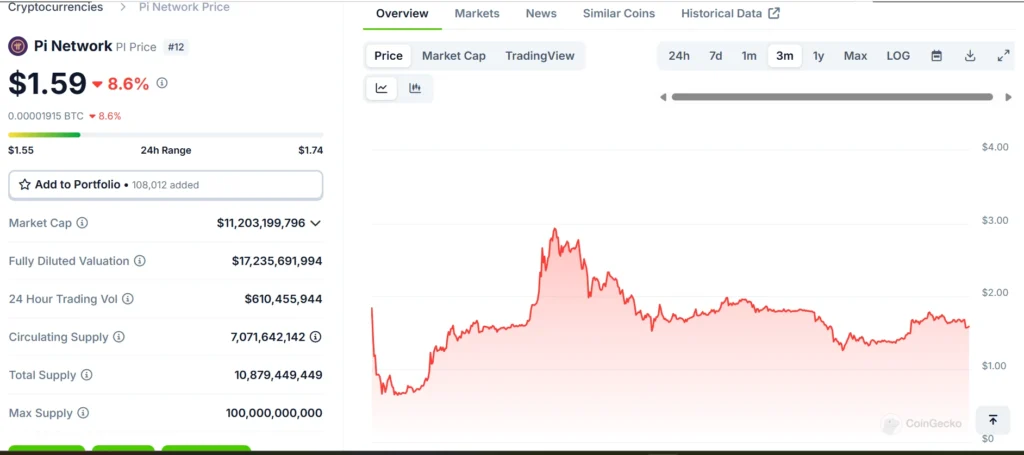
- Price Volatility: The initial trading period saw significant price fluctuations. Pi reportedly surged by over 35% on launch day, peaking at $1.97, before dipping to $0.737 and later stabilizing around $1.50-$1.55 by late February 2025.
This newfound tradability marked a turning point for Pi Pioneers, who had been mining coins for years without a clear market value. However, the volatility also raised concerns about potential sell-offs, with some analysts warning of a possible decline if too many users cashed out early.
2. Community Milestones and Engagement
The Pi Network community has been at the heart of its success, and post-launch updates have focused heavily on inclusion and engagement.
- Identity-Verified Pioneers: By March 2025, the network reported over 19 million identity-verified Pioneers through its Know Your Customer (KYC) process, exceeding the original goal of 15 million.
- Mainnet Migrations: Over 10.14 million Pioneers had migrated their mined Pi to the Mainnet by the launch date, ensuring they could participate in the Open Network. The Core Team continues to encourage remaining users to complete KYC and migrate.
- User Growth: The platform saw a surge in interest post-launch, with daily downloads averaging 110,000 and a peak of 540,000 new users on February 17, 2025, alone.
The Core Team has actively engaged the community through videos and announcements, with Pi Founder Chengdiao Fan emphasizing the network’s mission to “show the world a different path to crypto” in a celebratory Open Network video released on February 21, 2025.
3. Ecosystem Expansion and Real-World Utility
The Open Network launch aimed to transform Pi into a utility-driven cryptocurrency, and several updates have focused on expanding its ecosystem.
- Decentralized Applications (dApps): While the goal was to have 100 Mainnet-ready apps by launch, the network had 80 apps prepared by December 2024. Post-launch efforts have focused on encouraging developers to refine existing apps and build new ones. Notable apps include:
- Map of Pi: A directory of merchants accepting Pi.
- Pi Game: A gaming platform integrating Pi transactions.
- Care for Pi: A health-focused app using Pi for payments.
- Business Integration: Businesses can now undergo Know Your Business (KYB) verification to join the ecosystem. A list of KYB-verified businesses is available on the Pi website, fostering trust and encouraging real-world adoption.
- Planned Use Cases: The Core Team has outlined future use cases for Pi, including money transfers, NFT transactions, and payments for goods and services, aiming to make Pi a widely accepted digital currency.
4. Security and Compliance Measures
With the transition to an open ecosystem, Pi Network has prioritized security and regulatory compliance.
- KYC and KYB Requirements: All Pioneers must complete KYC to participate fully in the Open Network, while businesses require KYB verification. This ensures a secure and trustworthy environment.
- Scam Warnings: The Core Team issued advisories warning users about potential scams and unauthorized activities impersonating Pi Network. They urged Pioneers to use official channels like the Pi Safety Center for verified information.
- Node Transition: Post-launch, the network began transitioning nodes from Testnet to Mainnet, prioritizing reliable contributors to maintain network stability.

5. Price Dynamics and Market Sentiment
The launch brought much speculation about Pi’s price, and the initial trading period provided some clarity.
Initial Price Movements
| Date | Price (USD) | Change |
|---|---|---|
| Feb 20, 2025 | $1.97 | +35% (peak) |
| Feb 21, 2025 | $0.737 | -62.63% |
| Feb 24, 2025 | $1.55 | +80% rebound |
- Analyst Predictions: Some analysts predict Pi could reach $100 by 2030 if adoption grows, while others caution about short-term declines due to market saturation. Estimates for March 2025 range from $2.34 to $5.91.
- Community Sentiment: Despite volatility, the community remains optimistic. A poll cited by Brave New Coin showed 41.2% of voters hoping for a $314,159 valuation (a playful nod to the mathematical Pi), though more realistic expectations hover around $3-$10.

6. Challenges and Criticisms Post-Launch
While the launch was a success in many ways, it wasn’t without challenges.
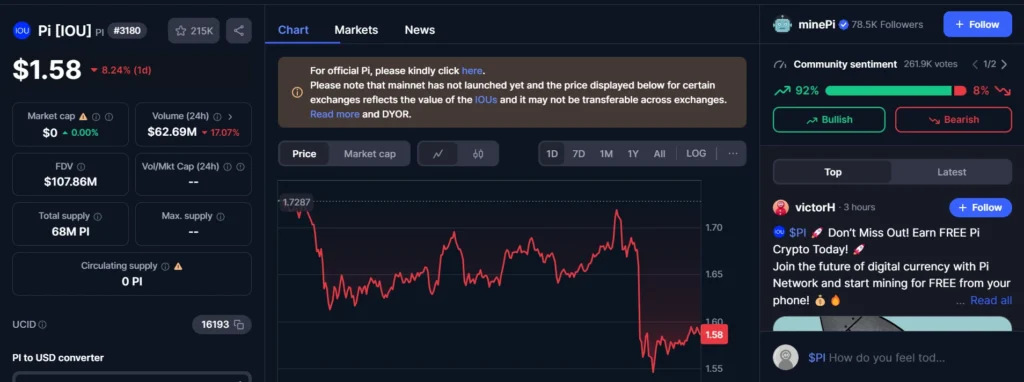
- Trading Risks: Some users reported concerns about trading risks on exchanges, with warnings about potential scams and unauthorized IOU tokens.
- Regulatory Uncertainty: As Pi gains traction, regulatory scrutiny is expected to increase. Governments may impose stricter rules on decentralized currencies, potentially impacting Pi’s adoption.
- App Readiness: The ecosystem still lacks the 100 Mainnet-ready apps targeted pre-launch, prompting calls for faster developer onboarding.
What’s Next for Pi Network?
The Pi Network’s journey post-launch is just beginning, and several updates are on the horizon.
- Staking and Passive Income: Future updates may introduce staking, allowing Pioneers to earn rewards by holding Pi.
- Merchant Adoption: The Core Team aims to onboard more merchants to accept Pi as payment, enhancing its real-world utility.
- Developer Incentives: Hackathons and incentives for developers are expected to continue, fostering innovation within the ecosystem.
- Global Expansion: With a strong user base in regions like Asia, Pi Network plans to expand its reach further, targeting underserved markets.
Why the Pi Network Matters in the Crypto Space
The Pi Network stands out in the crowded crypto market for its accessibility and inclusivity. Unlike Bitcoin, which requires expensive hardware and consumes vast amounts of energy, Pi allows anyone with a smartphone to participate. Its focus on utility-driven applications and community engagement sets it apart from speculative tokens, making it a project to watch in the coming years.


How to Stay Updated with Pi Network Developments
To keep up with the latest Pi Network updates:
- Follow official channels like the Pi website (minepi.com) and the @PiCoreTeam account on X.
- Join community forums and discussions to connect with other Pioneers.
- Regularly check the Pi Browser for new app releases and ecosystem updates.
Conclusion
The Pi Network’s Open Network launch on February 20, 2025, marked a new chapter for the project, bringing trading, real-world utility, and community engagement to the forefront. Since then, updates have focused on expanding the ecosystem, ensuring security, and navigating the challenges of a volatile market. While hurdles remain, the network’s commitment to inclusivity and innovation positions it as a potential game-changer in the crypto space. As Pi continues to evolve, Pioneers and crypto enthusiasts alike eagerly await what’s next for this groundbreaking project.
FAQs About All Updates of the Pi Network After the Open Network Launch
-
What is the Pi Network Open Network launch, and when did it Launch?
The Pi Network Open Network launch refers to the transition from the Enclosed Mainnet (a restricted blockchain) to a fully open ecosystem, allowing external connectivity, trading, and real-world use of Pi coins. It officially launched on February 20, 2025, at 8:00 AM UTC, marking a significant milestone for the project.
-
Can I trade Pi coins after the Open Network launch?
Yes, since the Open Network launch on February 20, 2025, Pi coins have become tradable on centralized exchanges like OKX and Bitget. However, users should exercise caution and verify the legitimacy of platforms to avoid scams involving unauthorized IOU tokens.
-
What was the price of the Pi coin after the launch?
Immediately after the launch, Pi coin experienced a price surge of over 35%, peaking at $1.97 on February 20, 2025. It later dipped to $0.737 before stabilizing around $1.50-$1.55 by late February. Prices may vary based on market conditions, so always check live data on exchanges like OKX.
-
How many users are part of the Pi Network after the launch?
As of March 2025, the Pi Network reported over 19 million identity-verified Pioneers through its KYC process, with more than 10.14 million having migrated to the Mainnet. The total user base, including non-verified users, is estimated to exceed 70 million globally.
-
What are the main updates to the Pi Network since the Open Network launch?
Key updates include:
1. Trading is enabled on exchanges like OKX and Bitget.
2. Expansion of the ecosystem with 80+ Mainnet-ready apps (aiming for 100).
3. Over 19 million Pioneers completed KYC, and 10.14 million migrated to Mainnet.
4. Focus on real-world utility, such as payments, NFT transactions, and money transfers.
5. Ongoing security measures, including KYC/KYB requirements and scam warnings. -
What can I do with Pi coins now that the Open Network has launched?
With the Open Network, you can:
1. Trade Pi coins on supported exchanges like OKX.
2. Use Pi for transactions within the Pi ecosystem, such as in dApps on the Pi Browser.
3. Explore real-world applications like payments for goods and services (where accepted).
4. Participate in future staking opportunities (if introduced). -
Are there any risks associated with trading Pi coins after the launch?
Yes, trading Pi coins involves risks such as price volatility, potential scams, and regulatory uncertainty. The initial price surge and subsequent dip highlight market fluctuations. Always use official channels, avoid unverified platforms, and trade cautiously.
-
What apps or use cases are available for Pi coins post-launch?
Post-launch, the Pi ecosystem includes apps like Map of Pi (merchant directory), Pi Game (gaming with Pi transactions), and Care for Pi (health payments). Planned use cases include money transfers, NFT transactions, and payments for goods/services, with more apps in development.
-
Why hasn’t Pi Network reached its goal of 100 Mainnet-ready apps yet?
As of December 2024, Pi had 80 Mainnet-ready apps, slightly below the target of 100. Post-launch efforts are focused on encouraging developers to refine existing apps and build new ones. The Core Team prioritizes quality and utility, which may contribute to the slower rollout.
-
Is Pi Network a scam, or is it legitimate after the Open Network launch?
Pi Network is a legitimate project with a large user base and active development, as evidenced by its Open Network launch and exchange listings. However, delays, volatility, and scam allegations have fueled skepticism. Always verify information through official channels like minepi.com to avoid misinformation.
-
What are the future plans for Pi Network after the Open Network launch?
Future plans include:
1.Introducing staking for passive income.
2. Onboarding more merchants to accept Pi as payment.
3. Expanding the developer ecosystem with hackathons and incentives.
4. Targeting global adoption, especially in underserved regions like Asia. -
How can I stay updated on Pi Network developments after the launch?
To stay informed:
1. Follow the official Pi website (minepi.com) and blog.
2. Check announcements on the Pi app and the @PiCoreTeam
X account.
3. Join community forums and discussions for real-time updates.
4. Monitor exchange listings and price trackers like CoinGecko for market news. -
What challenges has Pi Network faced since the Open Network launch?
Challenges include:
1. Price volatility, with significant fluctuations post-launch.
2. Regulatory uncertainties as governments scrutinize cryptocurrencies.
3. Concerns over app readiness, as the ecosystem hasn’t hit its 100-app target.
4. Reports of scams and unauthorized activities impersonating Pi Network. -
How do I complete KYC and migrate to the Mainnet after the launch?
To complete KYC and migrate PI Coins:
1. Open the Pi app and follow the KYC prompts to verify your identity.
2. Once KYC is approved, you’ll be eligible for Mainnet migration.
3. Follow in-app instructions to transfer your mined Pi to the Mainnet wallet.
4. Note: Deadlines for migration have been extended, with the latest “Grace Period” ending January 31, 2025. -
What are analysts predicting for Pi Network’s price in the coming months?
Price predictions vary:
1. March 2025 estimates range from $2.34 to $5.91.
3. Some bullish analysts predict $80 by the end of 2025 if adoption grows.
3. Long-term forecasts suggest $100 by 2030, though this depends on market trends and utility. Always approach predictions with caution.